


If you live in Leisure Village and want a brighter smile, you have options. The real question is: which actually delivers results? When weighing professional whitening vs. store kits, the differences go deeper than price. Understanding what each option does — and doesn’t do — helps you make a smarter choice for your smile and your health.
At North Dover Dental of Toms River, Dr. Yoni Moskowitz helps patients evaluate exactly this decision every week. Some patients come in after months of frustrating store-bought results. Others want to understand what professional treatment involves before committing. This article gives you an honest, straightforward breakdown.
How Professional Whitening vs. Store Kits Differ in Leisure Village
The core difference comes down to one thing: the strength of the whitening agent. Professional treatments use hydrogen peroxide concentrations significantly higher than anything sold over the counter. This makes a measurable difference in how deeply the solution penetrates enamel.
Store-bought kits — strips, gels, and trays — use lower concentrations for safety reasons. They are designed for the general public, without dental supervision. That means they must stay mild enough to avoid causing harm to untreated dental issues. A dentist, by contrast, evaluates your teeth first and customizes the approach.
Professional treatment also uses custom-fitted trays. These ensure the whitening gel contacts every surface evenly. Generic trays from a box rarely fit properly, leading to uneven results and potential gum irritation from gel leakage.
What Store-Bought Kits Actually Do Well
Let’s be fair — store kits are not useless. For patients with mildly surface-stained teeth, they can produce noticeable improvement. Coffee and tea stains that sit near the enamel surface respond reasonably well to over-the-counter strips used consistently over several weeks.
Store kits are also accessible and affordable. If you have healthy teeth, no sensitivity issues, and realistic expectations, they can be a reasonable starting point. Many dentists, including Dr. Moskowitz, do not discourage their use in appropriate cases.
Here is when store kits tend to perform adequately:
- Surface-level staining from coffee, tea, or red wine
- Patients with already-healthy, untreated enamel
- Maintenance after a professional whitening session
- Mild discoloration with no underlying dental concerns
However, they have real limitations. Deeper staining, intrinsic discoloration, or staining from medications rarely responds to store-bought products. Expecting dramatic results from a $40 kit often leads to disappointment.
Who Gets Better Results With Professional Whitening
Professional whitening is not just for people who want dramatic change. It is for anyone whose teeth have not responded to store kits. It is also for patients who want reliable, faster outcomes without guesswork.
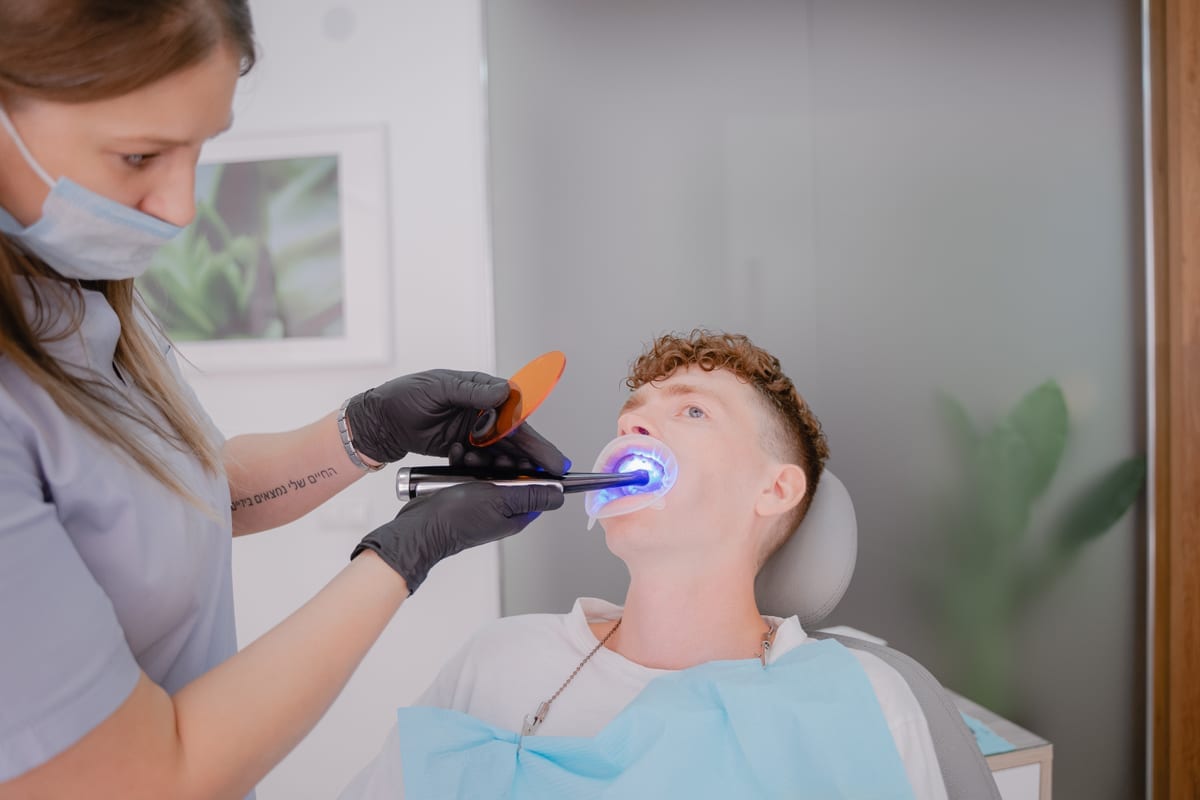
In-office whitening sessions typically take about an hour. Results are immediate and often dramatic — many patients see shades lighter in a single visit. Take-home kits provided by a dentist use stronger formulas than store versions and come with custom trays for better coverage.
Good candidates for professional whitening include:
- Patients with stubborn staining that strips haven’t touched
- Anyone preparing for a wedding, event, or milestone
- Patients with sensitivity concerns who need supervised treatment
- Those who want consistent, even whitening across all teeth
- Anyone with existing dental work needing a whitening plan around crowns or veneers
One important note: whitening does not change the color of crowns, veneers, or bonding material. Dr. Moskowitz will assess your existing dental work before recommending treatment. This prevents mismatched results that can occur when whitening natural teeth around restorations.
Oral Health Factors That Affect Whitening Success
Neither professional nor store-bought whitening works well on unhealthy teeth. Untreated cavities, gum disease, or cracked enamel can make whitening painful — or even harmful. This is one reason dentists evaluate your mouth before beginning any whitening treatment.
Good gum health is particularly important. Healthy gums hold up well to whitening agents. Inflamed or receding gums may be more sensitive during treatment. If you have not had a recent check-up, that is always the right starting point before whitening. Patients dealing with gum concerns may also want to explore Periodontic Dentistry to address underlying tissue health before beginning cosmetic treatments.
Additionally, patients with significant gaps, chips, or missing teeth may benefit from other cosmetic solutions alongside whitening. Bridges and other restorative options can address structural concerns while you pursue a brighter smile. A full assessment helps Dr. Moskowitz create a complete plan that makes sense for your situation.
Making the Right Choice for Your Smile in Leisure Village
The answer to
Frequently Asked Questions
How long does professional teeth whitening last?
Professional teeth whitening results typically last between 6 months to 2 years, depending on your lifestyle habits and dietary choices. Consuming staining beverages like coffee, red wine, and tea can shorten the longevity of your results. We recommend touch-up treatments annually to maintain your bright smile.
Is teeth whitening safe for sensitive teeth?
Yes, professional whitening can be performed on sensitive teeth with proper precautions. We can use desensitizing gel or lower concentration whitening solutions to minimize discomfort. If you have significant sensitivity, we’ll discuss the best approach during your consultation.
What’s the difference between professional and at-home whitening?
Professional whitening uses higher concentrations of bleaching agents and specialized equipment to deliver faster, more dramatic results in a single visit. At-home kits contain lower concentrations and take longer to work, though they offer convenience and gradual results. Professional treatments are generally more effective for stubborn stains.
Can whitening treatments remove all types of stains?
Whitening works best on surface stains caused by lifestyle habits like smoking and consuming dark beverages. Intrinsic stains from medications, aging, or tooth structure issues may not respond as well to whitening treatments. During your consultation, we can assess your specific stains and recommend the most effective solution.
When will I see results from teeth whitening?
Professional whitening results are often visible immediately after your first appointment, with optimal results appearing within 24 hours as the tooth structure rehydrates. Most patients experience noticeably whiter teeth that continue to improve slightly over the following week. The exact timeline varies depending on the starting shade of your teeth.