



Oral surgery covers a wide range of procedures designed to improve both the health and function of your mouth. While the term may sound complex, many of these treatments are more common than people realize and are performed every day to relieve discomfort and restore normal function. Whether it involves removing a damaged tooth, correcting jaw alignment, or replacing missing teeth, these procedures play a key role in long-term oral health.
For residents around Toms River and nearby coastal communities, maintaining dental health is essential for enjoying everyday activities, from dining out along the Jersey Shore to staying active year-round.
At North Dover Dental, care focuses on improving comfort, function, and confidence. This guide breaks down the three most common types of oral surgery so you can better understand what each involves and when it may be recommended.
Understanding Oral Surgery and When It’s Needed
Oral surgery refers to procedures performed inside the mouth and jaw to treat conditions that cannot be managed with routine dental care alone. These treatments address structural issues, infections, and tooth loss, helping restore both function and stability.
You may be advised to consider oral surgery in several situations. Severe tooth damage or infection is one of the most common reasons. When a tooth cannot be restored with fillings or crowns, removing it can prevent the spread of infection and protect surrounding teeth. Missing teeth are another concern, especially when they begin to affect chewing or cause neighboring teeth to shift out of place.
Jaw alignment issues can also lead to discomfort, difficulty chewing, or even speech challenges. In such cases, surgical correction may be recommended to improve how the upper and lower jaws fit together.
Early evaluation plays a crucial role in preventing complications. Ignoring symptoms like persistent pain, swelling, or difficulty biting can lead to more complex concerns over time. By seeking timely care, patients can often avoid more extensive procedures and maintain better long-term outcomes.
Tooth Extractions: When Removal Becomes Necessary
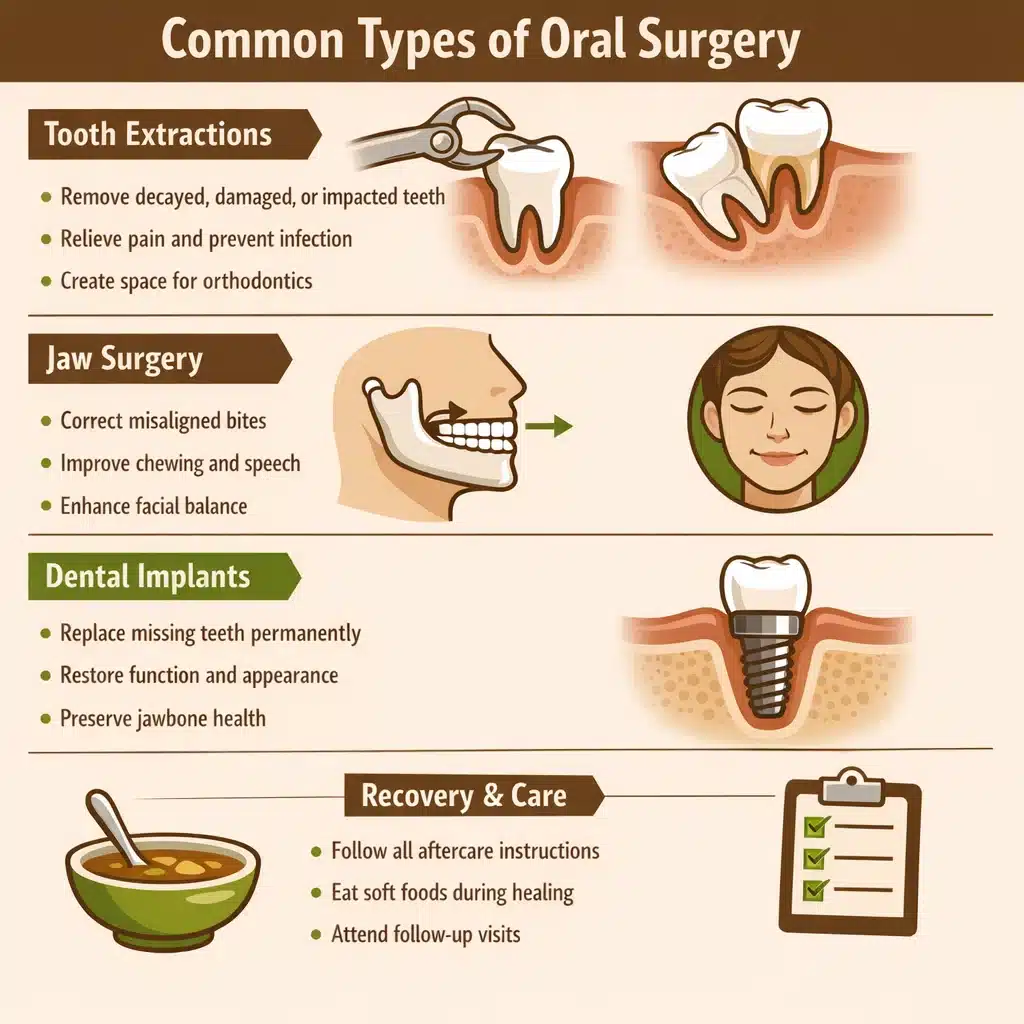
Tooth extractions are performed when a tooth can no longer be preserved or when its presence affects overall oral health. The goal is to eliminate pain, prevent infection, and create space when needed.
Common Reasons for Tooth Extractions
Several conditions may make extraction necessary. Advanced decay can weaken a tooth beyond repair, while impacted wisdom teeth may become trapped beneath the gums, leading to discomfort and swelling.
In some cases, overcrowding requires the removal of certain teeth to prepare for orthodontic treatment. Additionally, infections that threaten surrounding tissues may require prompt removal to prevent further complications.
What to Expect During the Procedure
The procedure is typically performed using local anesthesia to ensure comfort. Depending on the situation, the extraction may be simple or surgical.
A simple extraction involves removing a visible tooth, while a surgical extraction is used for teeth that are broken or impacted. Most procedures are completed within a short timeframe, allowing patients to return home the same day.
Recovery and Aftercare Basics
Healing usually begins within a few days, with full recovery taking a couple of weeks. Soft foods such as yogurt, soups, and mashed vegetables are recommended initially, while hard or crunchy foods should be avoided.
Following aftercare instructions is essential to prevent complications and support proper healing.
Jaw Surgery: Correcting Structure and Function
Jaw surgery is designed to address issues related to the alignment and structure of the jaw. It focuses on improving both function and overall balance, especially when non-surgical options are not sufficient.
Conditions That May Require Jaw Surgery
Certain conditions may indicate the need for surgical correction. These include misaligned bites such as overbites or underbites, which can place uneven pressure on teeth.
Some individuals may experience difficulty chewing or speaking, while others may notice facial imbalance or chronic discomfort.
How Jaw Surgery Improves Daily Life
Correcting jaw alignment can significantly improve everyday activities. Patients often experience better chewing efficiency, which supports digestion.
Speech clarity may also improve, and facial balance can enhance overall appearance. These changes contribute to both physical comfort and confidence.
Recovery and Healing Process
Recovery from jaw surgery occurs gradually. Patients may need to follow a modified diet for a period of time and attend follow-up visits to monitor healing.
With proper care, most individuals see steady improvement and long-term benefits.
Dental Implants: A Long-Term Tooth Replacement Solution
Dental implants offer a reliable solution for replacing missing teeth, restoring both appearance and function.
What Are Dental Implants and How They Work
A dental implant consists of a titanium post placed into the jawbone, where it acts as a stable foundation for a replacement tooth. Over time, the implant integrates with the bone, creating a secure base for crowns or other restorations.
Who Is a Good Candidate for Implants
Candidates typically have healthy gums, sufficient bone support, and a commitment to maintaining good oral hygiene. A thorough evaluation helps determine whether this option is suitable.
Benefits of Dental Implants
Implants provide long-lasting stability and closely mimic natural teeth in both appearance and function. They also help preserve the jawbone, preventing the changes that often occur after tooth loss.
How to Know Which Oral Surgery You May Need
Determining the right treatment begins with a professional evaluation. Every patient’s situation is unique, which is why a personalized approach is essential. During your visit, a detailed examination helps identify the underlying issue and the most effective solution.
Imaging tools such as digital X-rays or scans provide a clear view of the teeth, bone, and surrounding structures. This allows for accurate diagnosis and precise planning. Whether the concern involves a damaged tooth, missing teeth, or jaw alignment, the treatment plan is tailored to your needs.
At North Dover Dental, the focus is on guiding patients through each step with clarity. Understanding your options helps you feel more confident in your decision and ensures that the chosen treatment supports long-term oral health.
Preparing for Oral Surgery: What Patients Should Know
Preparation plays a key role in ensuring a smooth experience. Before the oral surgery in Toms River, patients may receive specific instructions, such as avoiding certain foods or medications. Providing a complete medical history is also important, as it helps the care team plan safely and effectively.
Scheduling time for recovery is another important step. Whether it involves taking time off work or arranging transportation, planning can make the process less stressful. Clear communication with your dental team ensures that you know what to expect before, during, and after the procedure.
Recovery Tips for a Smoother Healing Process
Recovery is an essential part of any procedure. Getting enough rest allows your body to heal efficiently, while staying hydrated supports overall recovery. Maintaining proper oral hygiene is equally important, but it should be done gently to avoid disturbing the treated area.
Avoiding certain habits, such as smoking or using straws, can help prevent complications. Paying attention to your body and following instructions carefully can make a significant difference in how quickly you recover.
When to Seek Professional Evaluation
Some symptoms should not be ignored. Persistent pain or swelling may indicate an underlying issue that requires attention. Difficulty chewing or biting can signal structural concerns, while missing or damaged teeth can affect both function and alignment.
If you notice any of these signs, it is important to seek evaluation promptly. Early care can prevent the condition from worsening and reduce the need for more complex treatment. For residents in and around Toms River, having access to reliable care makes it easier to address these concerns without delay.
Oral surgery plays an important role in maintaining long-term dental health, even though it is often associated with more advanced care. From removing damaged teeth to correcting jaw alignment and replacing missing teeth, these procedures are designed to restore comfort, function, and confidence.
Taking action early can help prevent complications and support better outcomes. At North Dover Dental, patients receive clear guidance and personalized care tailored to their needs.
If you have been experiencing discomfort or have concerns about your oral health, now is the right time to take the next step. Schedule an appointment today and move forward with confidence toward a healthier smile.
What People Ask
Is oral surgery always the last treatment option?
Not always. In some cases, early surgical intervention prevents further damage and reduces the need for more complex treatment later.
How long does it take to recover from a tooth extraction?
Initial healing typically takes a few days, while full recovery may take one to two weeks. Following care instructions helps speed up the process.
What are the signs that jaw surgery might be needed?
Difficulty chewing, jaw pain, or noticeable bite misalignment are common indicators. These issues often require evaluation to confirm structural concerns.
Do dental implants feel like natural teeth?
Yes, implants are designed to function and feel similar to natural teeth. Once healed, most patients find them comfortable and stable.
What should I avoid eating after oral surgery?
Hard, crunchy, or sticky foods should be avoided during early healing. Soft foods help protect the treated area and reduce irritation.